Renewable Energy Integration for Condominiums in Wisconsin: A Practical Guide for Multi-Unit Housing
Introduction: The Growing Demand for Renewable Energy in Wisconsin Condos
Wisconsin is experiencing a quiet revolution in sustainable living. As energy costs rise and environmental awareness grows, condominium associations across the state are exploring renewable energy integration.
For Rockshell Waali International Logistics and our construction expertise in SIC codes 236116 (Residential Construction), 236118 (Multi-Family Housing), and 333120 (Construction Machinery Manufacturing), this represents both a challenge and an opportunity.
The unique Wisconsin context—with its harsh winters, hot summers, and progressive energy policies—creates ideal conditions for innovative renewable solutions in multi-unit housing.
(Don’t forget the swings in humidity and mosquito counts!!!)

This guide explores practical approaches to integrating renewable energy into Wisconsin condominiums, addressing both technical and logistical challenges.
Challenges: Unique Issues with Multi-Unit Buildings vs Single-Family Homes
Condominiums present distinct challenges for renewable energy integration:
- Shared Ownership Structures: Decision-making requires consensus among multiple owners
- Limited Rooftop Space: Competing needs for HVAC, recreational areas, and solar panels
- Utility Metering Complexity: Individual vs. shared energy production and consumption
- Architectural Constraints: Historical buildings, aesthetic considerations, and structural limitations
- Financial Allocation: Fair distribution of costs and benefits among unit owners
In Wisconsin specifically, we face additional considerations:
- Snow load requirements for rooftop installations
- Extreme temperature ranges (-30°F to 100°F)
- State and local building codes for multi-family structures
- Utility interconnection policies for shared generation
Solutions: Comprehensive Renewable Integration Strategies
Solar Panel Options: Shared vs Individual Systems
Community Solar Arrays: Shared rooftop or ground-mounted systems that benefit all residents.
These can be sized to offset common area electricity usage (hallways, elevators, laundry rooms) or provide credits to individual units.
Balcony Solar Systems: Compact, plug-and-play systems for individual units, ideal for urban condos with limited shared space.
Building-Integrated Photovoltaics (BIPV): Solar panels that serve dual purposes as building materials, such as solar shingles or facade panels.
Geothermal Heating and Cooling for Condominiums
Wisconsin’s stable ground temperatures (45-55°F year-round) make geothermal ideal for:
- Vertical Loop Systems: Drilled boreholes that minimize surface disruption
- Shared Ground Source Networks: Multiple buildings connected to a common geothermal field
- Hybrid Systems: Combining geothermal with traditional HVAC for peak demand periods
Energy Storage for Condominiums
Community Battery Systems: Shared\Garage\Condo Unit storage that:
- Reduces demand charges for the entire building on the utility side and for the units
- Provides backup power during outages\storms
- Stores excess solar production for evening use, lowering bills during higher rates as fuel prices fluctuate.
Individual Unit Storage: Smaller systems for critical loads in each apartment.
Smart Energy Management Systems
IoT-based systems that:
- Monitor and optimize energy usage across the building
- Automate load shifting to reduce peak demand
- Provide real-time data to residents\Unit about their energy consumption
- Integrate with renewable generation and storage systems
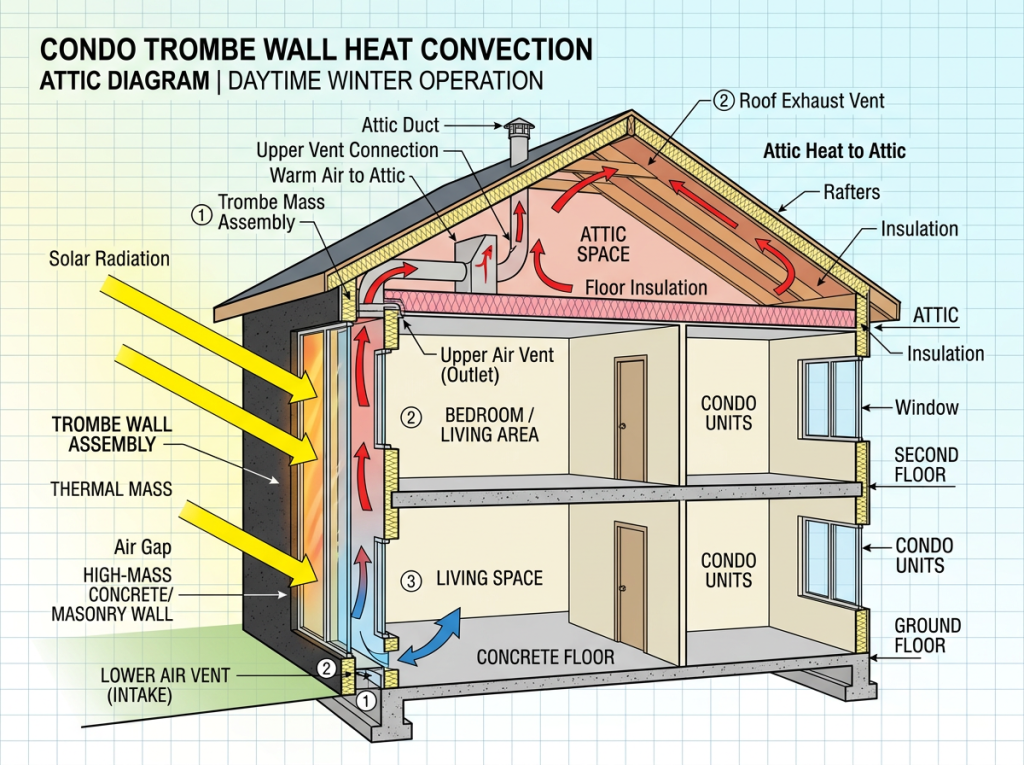
Innovative Design: South-Facing Building Walls and Thermal Functionality
Your insight about south-facing walls is particularly valuable for Wisconsin condos:
Thermally Functional Wall Designs
- Trombe Walls: South-facing masonry walls that absorb solar heat during the day and release it at night
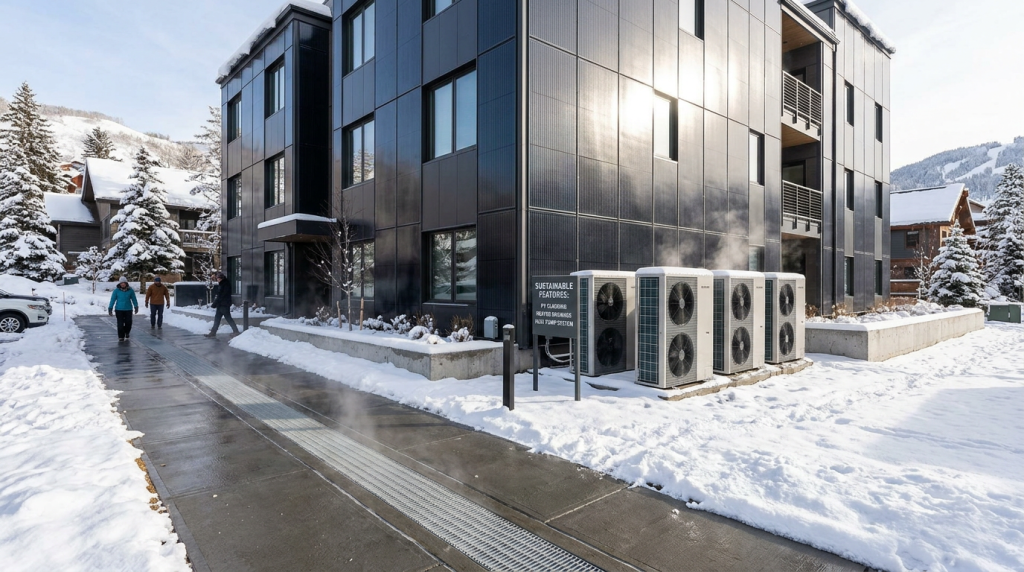
- Solar Thermal Facades: Building-integrated solar thermal collectors that provide space heating and domestic hot water
- PV-Integrated Cladding: Photovoltaic panels that serve as exterior wall coverings, reducing radio wave penetration and thermal heating
Roof Solutions for Wisconsin Climates
- Cool Roofs with Integrated PV: Reflective roofing materials combined with solar panels to reduce attic temperatures by 20-30°F
- Snow-Melting Systems: Hydronic or electric systems integrated with solar thermal collectors
- Green Roofs with Solar: Combining vegetation with elevated solar arrays for enhanced insulation and storm water management
Case Studies: Wisconsin Condominium Projects
ey Urban & Utility Solar Projects
- Sunnyside Solar Energy Center: A 20-MW solar array with 40 MW of battery storage in Fitchburg, slated to serve customers in 2026.
- Nine Springs Solar Project: A partnership between the Madison Metropolitan Sewerage District and MGE, expected to offset 46% of the District’s energy load.
- Tyto Solar: A 13,000-panel array in Fitchburg that came online in 2025, powering approximately 1,400 households.
- Park Badger Redevelopment: A redevelopment project incorporating solar energy and geothermal heating to meet sustainability standards.
City Sustainability Initiatives
- MadiSUN: Programs designed to expand solar access for homes, businesses, and nonprofits through competitive purchasing.
- City Facility Upgrades: The city is actively installing solar on municipal buildings to reach carbon reduction goals.
- Energy Goal: Madison aims to reduce carbon emissions by 80% by 2030.
Financial Considerations and Wisconsin Incentives
Cost Allocation Models
- Condominium Association Ownership: System owned by the association, benefits distributed via reduced common charges
- Third-Party Ownership: Power purchase agreements (PPAs) with no upfront costs; Lien signed with condo association
- 10/15/20 year plans
- CO-OP Condo TRUST using HELOC funding held by the condo to use the equity value of the Condo to fix and upgrade the facility and lower cost at lower financing rates than conventional construction loans.
- Hybrid Models: Combination of association and individual unit investments
Wisconsin-Specific Incentives
- Focus on Energy grants for multi-family buildings
- Federal Investment Tax Credit (ITC) for solar and storage
- Net metering policies for shared generation
- Property Assessed Clean Energy (PACE) financing
Return on Investment Analysis
Typical payback periods for Wisconsin condos*:
- Solar PV: 6-10 years
- Geothermal: 8-12 years
- Energy storage: 7-9 years (when paired with solar)
- Smart systems: 2-4 years through operational savings
Implementation Guide: Step-by-Step for Condo Associations
Phase 1: Assessment and Planning (Months 1-3) $8000.00 without financing
- Form a green committee within the condo association (asses current energy situation)
- Conduct energy audit and renewable resource assessment
- Review governing documents and insurance requirements
- Develop preliminary budget and financing options
Phase 2: Design and Approval (Months 4-6)
- Engage architects and engineers familiar with Wisconsin codes
- Design system integrating your specific suggestions (south-facing walls, PV cladding, etc.)
- Obtain necessary approvals from:
- Condo association board and residents
- Local building department
- Utility company
Finalize contracts and financing
Phase 3: Installation and Commissioning (Months 7-9)
- Coordinate construction with minimal resident disruption
- Install systems with attention to Wisconsin weather considerations
- Commission and test all components
- Train residents
Phase 4: Operation and Optimization (Ongoing with feedback if needed for capacity upgrades)
- Monitor system performance limited to financing term, fees to be negotiated on contract (based on style of system agreed to)
- Share benefits data with residents
- Plan for maintenance and future expansions
- Document lessons learned for other Wisconsin condos
The Rockshell Waali International Logistics Advantage
Our experience across SIC codes 236116, 236118, and 333120 gives us unique insight into:
- Construction logistics for urban multi-family projects
- Equipment selection optimized for Wisconsin conditions
- Project management of complex, multi-stakeholder installations and contractors for installations
- Regulatory navigation specific to Wisconsin municipalities
Conclusion: The Future of Sustainable Multi-Family Housing in Wisconsin
Renewable energy integration in condominiums represents more than just environmental responsibility—it’s a practical solution to rising energy costs, increasing property values,
and enhancing resident comfort. Wisconsin’s unique climate and progressive energy policies create ideal conditions for innovation.
The technologies and strategies discussed here—from south-facing thermal walls to community solar arrays—are not theoretical.
They’re being implemented today in Wisconsin condominiums, delivering real benefits to residents and property owners alike.
As Rockshell Waali International Logistics continues to advance sustainable construction practices, we’re committed to helping
Wisconsin condominium associations navigate this transition. The future of multi-family housing in our state is not just renewable—it’s resilient, efficient, and community-focused.
Ready to explore renewable energy options for your Wisconsin condominium? Contact Rockshell Builders International to schedule a consultation and energy assessment specific to multi-unit housing in our region.
*: Subject to changing costs due to the market fluctuations being felt by the world at this time.